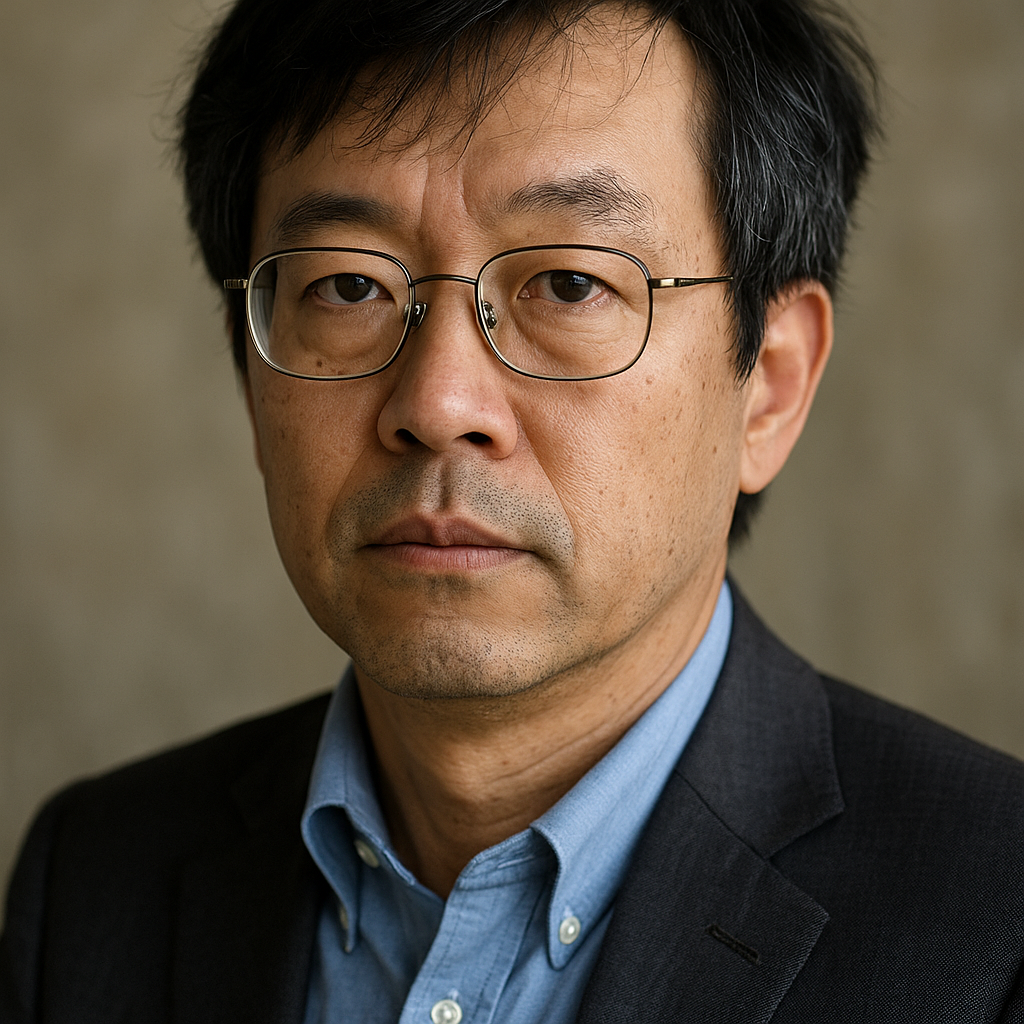
Bitcoin’s inception is shrouded in the mystery of its founder, Satoshi Nakamoto, a figure whose identity remains unconfirmed. Little concrete information is available about whether this represents a singular individual or a group.
The cryptocurrency landscape was forever altered when a message by Satoshi Nakamoto, titled “Bitcoin P2P e-cash paper,” emerged in October 2008, signaling Bitcoin’s creation. Throughout the next two years, Satoshi was actively engaged in the community, fostering the development of blockchain technology. The final public message posted by Satoshi on the Bitcoin forums is dated December 2010, yet unverified messages from April 2011 have appeared.
Additionally, the name “Satoshi Nakamoto” serves as a pseudonym for Bitcoin’s creator or creators. Publicly, the identity remains elusive despite intense scrutiny. One notable investigation identified Dorian Nakamoto as Bitcoin’s mastermind, a claim he firmly denies. Another figure, Craig Wright, has persistently claimed the title, though a court decisively found substantial evidence counter to his assertions. Nick Szabo, credited with Bit Gold’s creation in 2008, is another potential candidate thought to be Nakamoto.
Satoshi Nakamoto’s influence extends beyond founding Bitcoin, embodying a philosophical cornerstone in the cryptocurrency domain. Several hundred BTC are speculated to belong to entities related to Nakamoto, including the original address, which facilitates transactions of over 100 BTC. This address swells as contributions continue. It’s believed that Nakamoto might control multiple addresses, collectively accounting for over 1.1 million BTC.
The elusive challenge of unmasking Satoshi Nakamoto has only resulted in suggesting a few names, without definitive proof. Let us delve into four intriguing candidates.
In a high-profile revelation attempt, Newsweek identified Dorian Nakamoto in March 2014 as Bitcoin’s creator. Newsweek drew parallels between Satoshi and Dorian’s libertarian ideals and Japanese ancestry. With a physics degree from California Polytechnic and experience in defense projects, Dorian allegedly declared he was “no longer” involved with Bitcoin, having “transferred” it to others.
Unexpected Results
Displaying a photograph of Nakamoto’s residence was an ill-conceived move by the magazine, easily pinpointing the location. Though skepticism persisted regarding Dorian Nakamoto’s role as Bitcoin’s creator, the community was outraged by the privacy breach.
Dorian Nakamoto later refuted the statement, attributing it to a misunderstanding of the question, and asserted no involvement with Bitcoin. Despite the media frenzy, Dorian Nakamoto inadvertently profited from it. In March 2014, Andreas Antonopoulos, a tech entrepreneur, and crypto-enthusiast, initiated a fundraiser to offset Nakamoto’s hardships. Over 2,100 supporters contributed 102.23 bitcoins, valued at roughly $34,500 then. By November 2024, their value would have escalated to over $7 million. Nevertheless, only 0.00370010 BTC (about $282) remained in the address.
Most individuals thought to be Satoshi Nakamoto have either stayed silent or denied the assertion, except for an Australian known for his intriguing presence.
Wired Magazine spotlighted Wright in December 2015, purporting to have the “strongest evidence” of Satoshi’s authentic identity. The article recounted Wright’s appearance on Skype during the Bitcoin Investor’s Conference in Las Vegas, presenting a diverse profile. Wright enumerated his academic credentials, including a master’s in statistics and two doctoral degrees. He professed involvement with Bitcoin since its genesis, preferring to “stay under the radar.”
Wired’s assertions were soon scrutinized. Claims that Wright’s blog included “cryptocurrency paper” references months ahead of Bitcoin’s whitepaper, along with leaked communications with his lawyer and tax officials, appeared flimsy. They indicated an effort to “conceal” his leadership in Bitcoin since 2009, but Wright’s narrative displayed inconsistencies. Blog posts seemed backdated, and public encryption keys tied to Nakamoto were suspect. Ethereum co-founder Vitalik Buterin, typically discreet on cryptocurrency politics, publicly denounced Wright as a fraud.
Nonetheless, Wright thrived from the controversy, cementing a significant role in the crypto community. He spearheaded a controversial Bitcoin Cash split, resulting in Bitcoin SV formation. By March 2024, London’s High Court, led by Judge James Mellor, concluded that Wright was not Satoshi Nakamoto, citing overwhelming evidence against him.
Fascinating Insight
The phrase “we” populates Nakamoto’s Bitcoin whitepaper, suggesting that multiple individuals might have operated under a solitary alias.
Nick Szabo, a computer engineer and legal scholar, devised the concept of Bit Gold, a Bitcoin precursor. Bit Gold was defined as a protocol enabling the creation of “unforgeable costly bits” online with minimal reliance on trusted third parties. This aligns with Bitcoin’s structure, where transactions are authenticated by a decentralized network.
Author Dominic Frisby, in his book “Bitcoin: The Future of Money?”, contends that Nick Szabo is indeed Satoshi Nakamoto. Through a stylometrics expert, Frisby found Szabo’s writing resembled Nakamoto’s. Both figures referenced economist Carl Menger, and Szabo’s involvement with DigiCash—an early pioneering attempt at cryptographic digital payments—solidified Frisby’s belief in Szabo’s connection to Bitcoin’s progenitor.
Most prominently, investigative filmmaker Cullen Hobak accused Peter Todd of being Nakamoto in the 2024 HBO documentary “Money Electric.” Todd, labeled an “Applied Cryptography Consultant,” has been active in Bitcoin development for years. Consistent with known developer stances, Todd denied the persona accusations. The documentary provided only circumstantial evidence, and the Bitcoin development community dismissed the claim.
Exploring Satoshi Nakamoto’s True Identity
Unveiling the identity of Bitcoin’s creator remains unlikely. Despite the pseudonymous nature of the Bitcoin forum account, no concrete evidence points to one individual. Although someone might possess knowledge of Nakamoto’s true identity, they have chosen silence.
For those who might be aware, the silence surrounding Satoshi Nakamoto’s true identity has been steadfast. There is speculation that Nakamoto was indeed a collective rather than a singular entity.
The total amount of bitcoins owned by Nakamoto remains uncertain, as various addresses were likely utilized for mining blocks. Collectively, it is assumed that Satoshi holds approximately 1.1 million bitcoins.
Speculation abounds regarding Satoshi Nakamoto’s true identity. While news outlets and interested factions continue their probing endeavors, the certainty of Nakamoto’s identity might always remain elusive, likely by deliberate design.