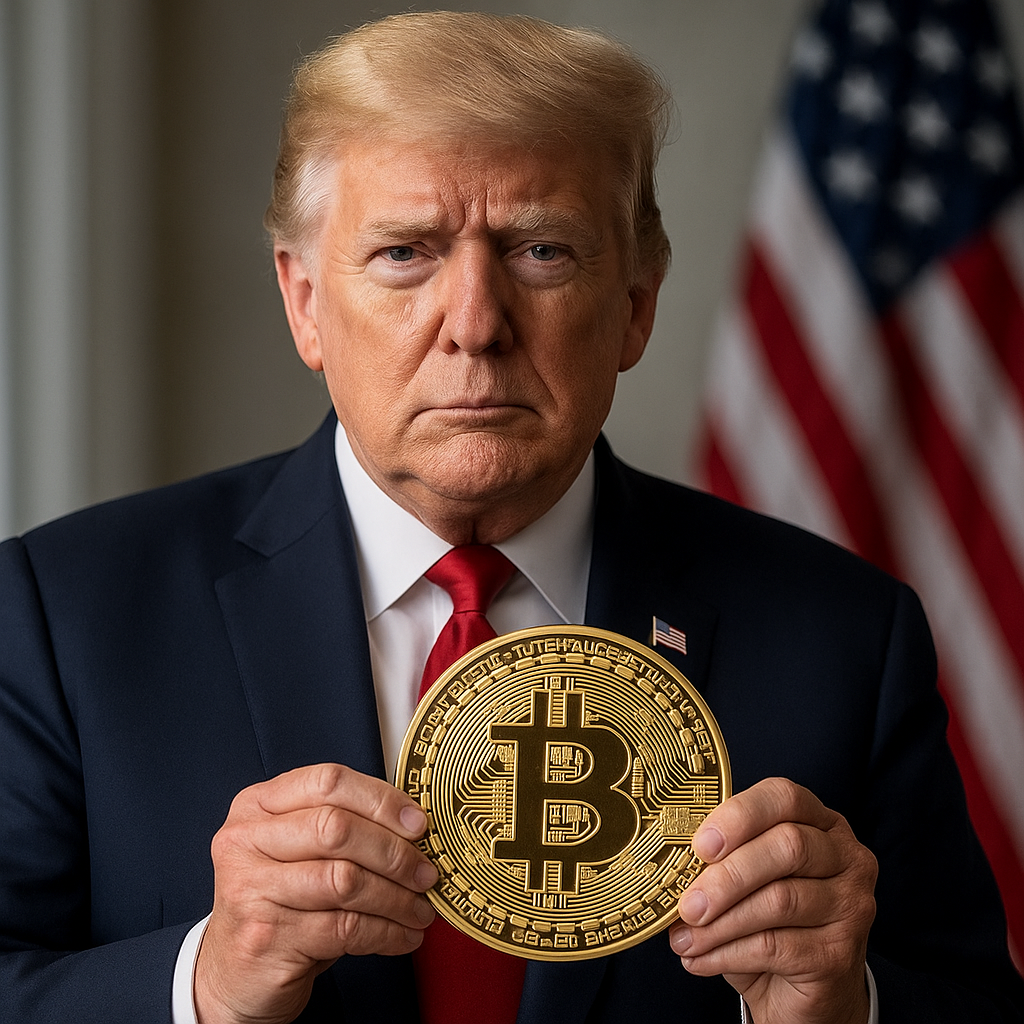
The United States has made strides in the realm of digital assets and fintech as President Donald Trump enacted a directive to fortify America’s standing. The promise of a bitcoin accumulation is partially fulfilled by this executive decision, but its language generates ambiguities about its feasibility.
With aspirations for regulatory transparency, the executive command initiates reforms that are progressively taking shape. A notable development is the SEC’s reversal of a divisive bookkeeping edict that inhibited conventional finance entities from safeguarding bitcoin.
Bitcoin experienced a modest decline following the Thursday announcement, yet rebounded swiftly to trade around $105,000 by late Friday.
Clarity and Ambiguity in Strategic Stockpile Creation
The directive’s creation of a task force aims to clarify regulatory matters, including the “potential formation and upkeep of a national digital asset reserve.” However, this introduces confusion due to the ambiguous terminology. Initially, the document merely alludes to the exploration of a “potential” stockpile, without specificity to bitcoin, rather encompassing “digital assets.”
Moreover, it hints at utilizing the existing cryptocurrency assets accrued from government enforcement actions, instead of engaging in crypto market activities directly.
Galaxy Digital’s Research Lead, Alex Thorn, commented on X that ‘stockpile’ is financial jargon implying the retention of current holdings, rather than new acquisitions. Thorn’s insights, as shared on X, suggest that the reserve would predominantly consist of bitcoin, overshadowing other digital currencies.
The prospect of establishing a bitcoin reserve faces significant challenges, according to some experts. Nic Carter, a partner at Castle Island Ventures, noted on X, “Legislation is necessary for an authentic ‘strategic bitcoin reserve,’ and it’ll likely face legislative hurdles.”
The Crypto Landscape: Optimism in Uncertain Times
The likelihood of forming a bitcoin strategic reserve in the U.S. has decreased, with Polymarket’s prediction market reflecting a decline from 76% to 61% probability recently.
Nevertheless, the executive order holds promise for the cryptocurrency sector. According to Coin Center’s Executive Director, Peter Van Valkenburgh, the order is mainly about structuring suitable processes and teams for enhancing crypto regulations.
The crypto industry has voiced concerns over the lack of regulatory clarity and the SEC’s enforcement-focused approach, and there are indications that these issues are beginning to be addressed.
For instance, the SEC revoked Staff Accounting Bulletin No. 121 (SAB 121) shortly after the executive order was issued, a rule that previously hindered traditional financial institutions from acting as bitcoin custodians.
Wyoming Republican Senator Cynthia Lummis expressed on X that “SAB 121 was disastrous for the banking sector, stalling American digital asset innovation and advancement.”